UV Disinfection: A Powerful Technology for Safe and Clean Environments
Ultraviolet (UV) disinfection is an effective and chemical-free method used to inactivate microorganisms such as bacteria, viruses, and protozoa. By using ultraviolet light — primarily in the UV-C wavelength range (200–280 nanometers) — this technology disrupts the DNA and RNA of pathogens, preventing them from reproducing and causing infections. UV disinfection has gained widespread adoption across water treatment, healthcare, food processing, air purification, and industrial applications due to its efficiency, safety, and environmental benefits.
One of the most common applications of UV disinfection is in water and wastewater treatment. Municipal water utilities use UV systems to eliminate harmful pathogens like E. coli, Cryptosporidium, and Giardia without altering the taste, odor, or chemical composition of water. Unlike chlorine-based disinfection, UV treatment does not produce harmful disinfection by-products, making it an eco-friendly alternative. UV systems are also widely used in residential water purifiers, swimming pools, and industrial process water treatment.
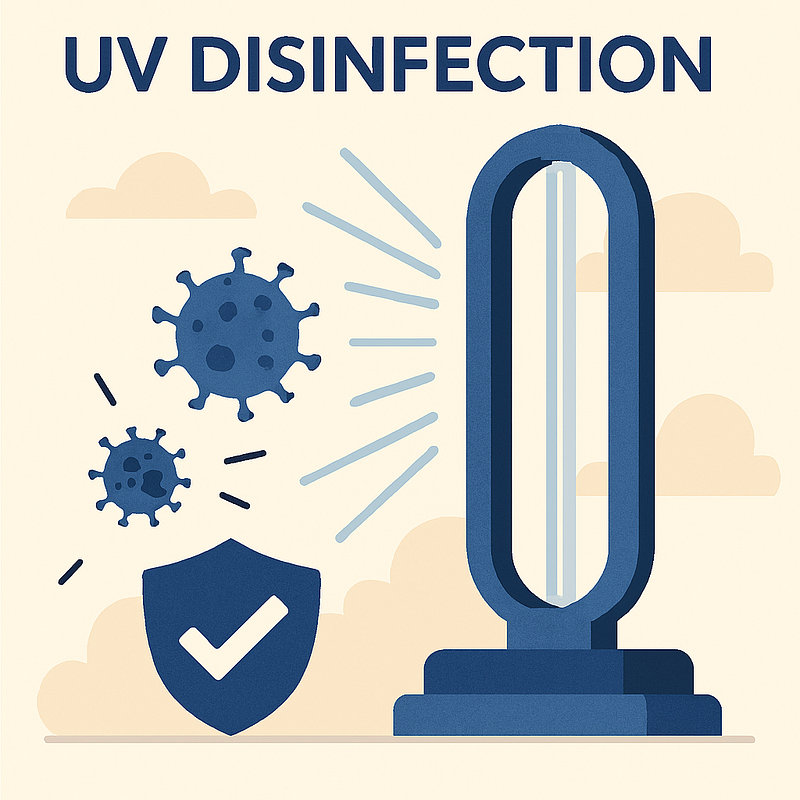
In healthcare settings, UV disinfection plays a critical role in infection control. Hospitals use UV devices to disinfect operating rooms, patient wards, medical equipment, and high-touch surfaces. UV-C robots and mobile disinfection units help reduce hospital-acquired infections (HAIs) by targeting pathogens such as MRSA, Clostridium difficile, and viruses. During global health crises, including viral outbreaks, UV disinfection has proven valuable in rapidly sanitizing spaces without the use of harsh chemicals.
Air and surface disinfection is another rapidly growing area for UV technology. UV-C lamps are integrated into HVAC systems to disinfect circulating air, improving indoor air quality in offices, schools, airports, and commercial buildings. Upper-room UV germicidal irradiation systems continuously inactivate airborne pathogens, reducing the spread of respiratory diseases. In food and beverage processing, UV disinfection is used to sanitize packaging, conveyor belts, and food surfaces, helping manufacturers comply with strict hygiene standards while extending product shelf life.
Recent advancements have further strengthened the UV disinfection market. The development of UV-LED technology offers advantages such as lower energy consumption, longer lifespan, instant on/off capability, and mercury-free operation compared to traditional UV lamps. Additionally, Far-UV (222 nm) technology is emerging as a safer option for occupied spaces, as it can inactivate pathogens without penetrating human skin or eyes deeply.
Despite its benefits, UV disinfection has some limitations. It requires proper system design, adequate exposure time, and regular maintenance to ensure effectiveness. UV light also does not provide residual disinfection, meaning microorganisms can re-enter treated environments if not properly controlled.
In conclusion, UV disinfection is a highly effective, sustainable, and versatile technology that supports public health and environmental safety. With growing concerns about water quality, air pollution, and infectious diseases, UV disinfection is expected to play an increasingly important role in creating safer living and working environments worldwide.

Comments
Post a Comment